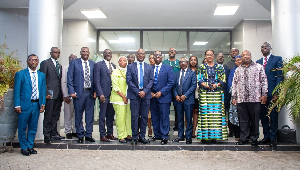
Ghana and Uganda are strengthening cooperation in the upstream petroleum sector through the exchange of practical lessons on petroleum governance, regulation and operations.
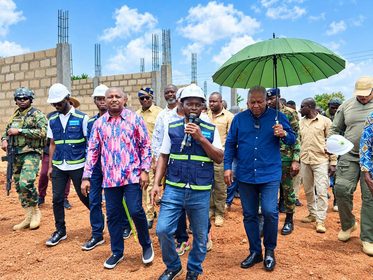
The Petroleum Commission (PC) last week hosted the Board of Directors of the Petroleum Authority of Uganda (PAU) for a high-level peer-learning engagement aimed at sharing experiences and strengthening regulatory capacity.
Opening the engagement, Ms Emeafa Hardcastle, Chief Executive Officer of the Petroleum Commission, described the visit as an opportunity for both institutions to learn from each other’s experiences.
“This is not simply a routine bilateral engagement. It is an opportunity for two African petroleum regulators to share what has worked, confront the challenges we have encountered and learn from each other as we seek to ensure that our petroleum resources deliver lasting value to our people.”
Ms Hardcastle noted that Ghana was prepared to share the successes and challenges it had experienced since transitioning from petroleum exploration and development into commercial production.
She identified Ghana’s legal and regulatory framework, policy development, expenditure oversight, health, safety and environmental standards, investment facilitation, and local content development as key areas of experience.
According to her, local content remains central to Ghana’s petroleum governance strategy, ensuring that citizens and local businesses derive meaningful benefits from the industry.
“We want Ghanaians to be active participants in the petroleum industry, not spectators.”
Mr Ernest Thompson, Board Chairman of the Petroleum Commission, said the engagement was important as African petroleum regulators confront increasingly complex challenges in the upstream sector.
“As African regulators, we must learn from one another. By sharing our experiences and lessons, we can strengthen our institutions and ensure that petroleum resources are managed responsibly for the benefit of our people.”
Mr Thompson commended the Petroleum Authority of Uganda for its progress as the country advances its major upstream projects.
He said Ghana had followed Uganda’s experience with particular interest, including its work in onshore resource management, community engagement and environmental safeguards.
He expressed the expectation that the engagement would lead to a more formal knowledge-sharing arrangement between the two regulatory institutions.
Speaking on behalf of the Ugandan delegation, Professor Vincent Bagire, a Member of the Board of the Petroleum Authority of Uganda, said the delegation was in Ghana to learn from the country’s experience while sharing lessons from Uganda’s own petroleum development.
“We have come to Ghana to learn, to share and to build a relationship that goes beyond this meeting. As Uganda moves towards first oil, the lessons from countries that have already gone through the exploration, development and production phases are extremely valuable to us.”
Prof Bagire said the engagement was not about comparing institutions but about identifying practical approaches that could improve regulatory effectiveness in both countries.
During the visit, the Petroleum Commission delivered a series of technical presentations covering Ghana’s legal and regulatory framework, policy underpinnings, institutional arrangements, upstream petroleum operations, local content development, and health, safety and environmental management.
The presentations were followed by interactive discussions, enabling members of both delegations to ask questions, challenge perspectives and exchange practical experiences on the regulation of upstream petroleum activities.
The discussions focused on the realities of petroleum governance and the lessons that could be drawn from each country’s experience.
As Ghana increasingly explores opportunities for onshore petroleum development, including activities in the Voltaian Basin, Uganda’s experience in onshore petroleum operations was identified as offering valuable lessons.
Both sides also acknowledged the broader challenges facing the petroleum industry, including the need to attract investment, manage resources efficiently, uphold environmental and safety standards, and adapt to changes in the global energy landscape within the context of the energy transition.
The engagement between the boards of the Petroleum Commission and the Petroleum Authority of Uganda ended with a shared commitment to deepen cooperation and sustain knowledge exchange as Ghana and Uganda work to ensure their petroleum resources contribute meaningfully to national development.
GNA