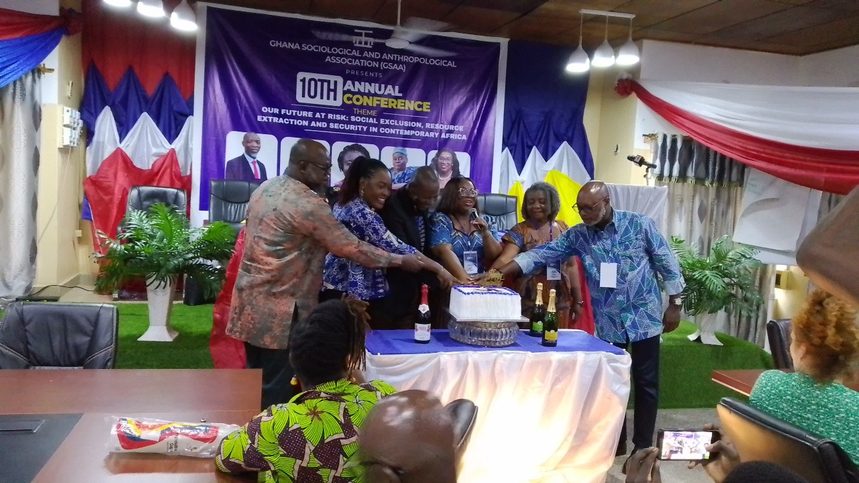
The Ghana Sociological and Anthropological Association (GSAA) has described the destruction caused by illegal mining as “intolerable” and called on the Government to adopt firm and apolitical measures to enforce environmental laws without fear or favour to halt the menace.
It said ending illegal mining was critical to protecting water sources, farmlands and community health, preserving forests and biodiversity, and safeguarding the long-term economic stability of affected areas.
In a communiqué signed by Professor William Boateng, Convenor of GSAA, and issued at the end of its 10th Annual Conference at the University of Cape Coast, the Association called for immediate action to set appropriate standards for responsible mining.
“The destructive mining menace cannot be tolerated,” the Communique said, stressing that effective enforcement of existing environmental regulations and clear, non-partisan policy direction are critical to stemming further degradation.
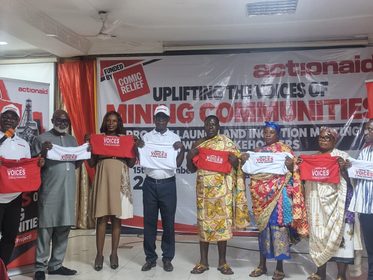
The GSAA also urged mining-affected communities to negotiate robustly with mining companies to secure fair and adequate compensation.
The Association said well-negotiated compensation would help communities recover lost livelihoods, fund local rehabilitation and development projects, and establish legally documented arrangements to reduce exploitation and future disputes.
“Communities that insist on transparent compensation agreements, environmental restoration clauses and monitoring mechanisms are better placed to protect their long-term interest,” the Communique added.
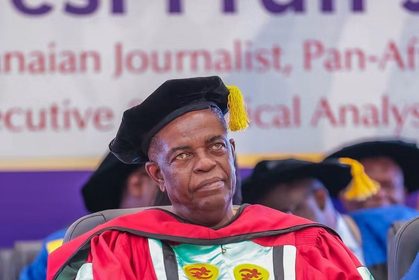
The two-day conference was held on the theme: “Our Future at Serious Risk: Insights on Social Exclusion, Resource Extraction and Security in Contemporary Africa.”
It brought together academics and researchers from major tertiary institutions, including the University of Ghana, Legon; the Kwame Nkrumah University of Science and Technology; University of Education, Winneba; University for Development Studies, Tamale; and the University of Cape Coast.
Delegates deliberated on a range of social and policy issues, including resource extraction and social exclusion, the risky future of Ghana’s public service, illegal mining and its ramifications.
Other issues were citizen empowerment in addressing mining-related challenges, politicisation of appointments and recruitment, employment challenges, digitalisation without institutional redesign, and environmental degradation from mining activities.
On national governance, the GSAA called for the completion of the country’s decentralisation process rather than its mere reaffirmation.
It said the current decentralisation process remained incomplete because funds continued to be disbursed from the centre, often arriving late and undermining local planning and service delivery.
The Association also recommended that national and district development plans include a dedicated conflict analysis component covering environmental, social, economic and political sources of tension.
To promote openness and inclusiveness in Ghana’s public service, the GSAA called for the public advertisement of employment opportunities and selection through open and competitive processes rather than informal referral channels.
On appointments, it called for an end to politicisation, warning that partisan selection practices did not promote inclusiveness or national cohesion.
Across Africa, the Association urged governments to ensure that development policies went beyond national growth targets to promote the equitable distribution of opportunities across regions and social groups.
It also called on governments to incorporate measures that promoted fairness and inclusion into national development strategies.
The GSAA said implementing the recommendations would strengthen governance, reduce tensions and improve development outcomes in Ghana and across the African continent.
GNA