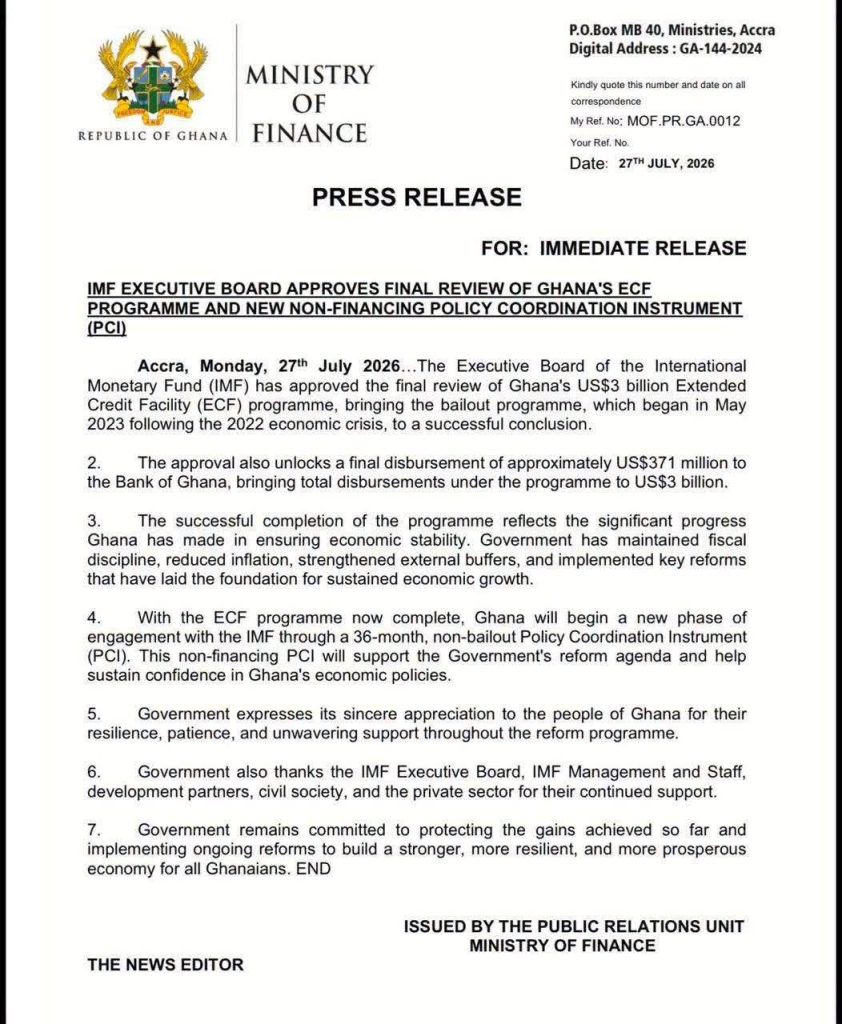
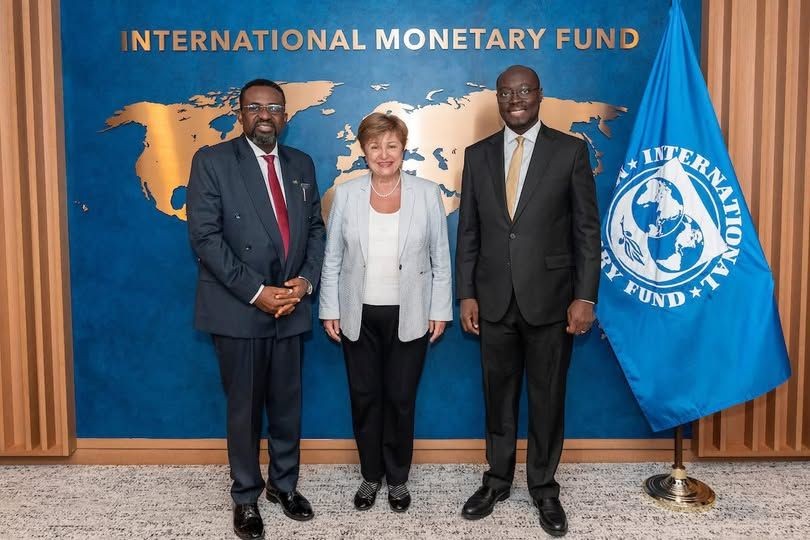
The Executive Board of the International Monetary Fund (IMF) has approved the final review of Ghana’s US$3 billion Extended Credit Facility (ECF) programme, concluding the bailout programme that began in May 2023 following the 2022 economic crisis.
In a statement issued by the Ministry of Finance, the government said the programme’s successful conclusion is a testament to significant strides made in restoring economic stability.
Key achievements cited include sustained fiscal discipline, reduced inflation, strengthened external buffers, and the implementation of critical structural reforms.
The government noted that these gains have laid a firm foundation for sustained economic growth.
With the ECF now complete, Ghana is shifting to a new, 36-month Policy Coordination Instrument (PCI), a non-bailout, non-financing arrangement with the IMF.
Unlike the ECF, the PCI provides no funds. Instead, it serves as a policy anchor, supporting Ghana’s reform agenda and helping maintain investor and partner confidence in the country’s economic direction.
The government extended heartfelt appreciation to Ghanaians for their resilience and patience through the difficult reform period, acknowledging the sacrifices made by citizens.
Thanks were also conveyed to the IMF Executive Board, Management and Staff, development partners, civil society, and the private sector for their backing throughout the programme.
Reaffirming its commitment to the recovery path, the government vowed to protect the gains so far achieved and push forward with ongoing reforms aimed at building a more resilient and prosperous economy.
“Government remains committed to protecting the gains achieved so far and implementing ongoing reforms to build a stronger, more resilient, and more prosperous economy for all Ghanaians,” the statement read.