
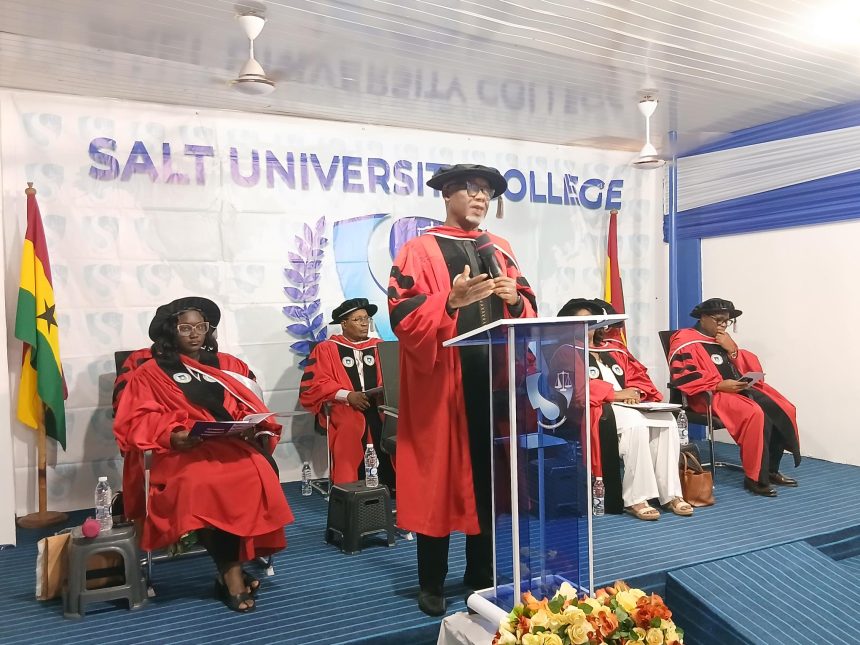
Nine professionals have graduated from the Executive Certificate in International Relations and Diplomacy (ECIRD) programme at SALT University College, with speakers urging them to demonstrate ethical leadership and apply their knowledge to address national and global challenges.
The six-week executive programme, organised through a partnership between the University and the Centre for African Diplomacy and Global Engagement (AFLO Global), was designed to equip participants with practical knowledge and skills to navigate the complexities of an increasingly interconnected international system.
Speaking at the ceremony, on the theme: “Equipping Tomorrow’s Leaders Today for National and Global Impact,” Dr. Kodzo Alabo, President of SALT University College, said the ECIRD programme was in response to the growing need for professionals capable of serving effectively in government, business, civil society, faith-based organisations and international institutions.
“Our responsibility as a university is not simply to prepare students for employment but to prepare them for influence,” he said, admonishing the graduates to uphold the institution’s core values of integrity, leadership and stewardship in their personal and professional lives.
He reminded the graduands that earning the certificate marked the beginning of a greater responsibility to serve society with excellence, integrity and professionalism and urged them to translate the lessons acquired during the programme into practical interventions that would benefit their organisations, communities and the nation.
He also encouraged them to ensure that their success was measured not only by personal advancement but also by the positive difference they made in the lives of others.
“The knowledge you have acquired must become wisdom in practice. The skills you have gained must become solutions to real challenges. The values you have embraced must become visible in the way you lead, serve and relate to others,” Dr Alabo added.
He assured of the institution’s commitment to producing leaders of character, competence and conviction rather than merely awarding academic qualifications.
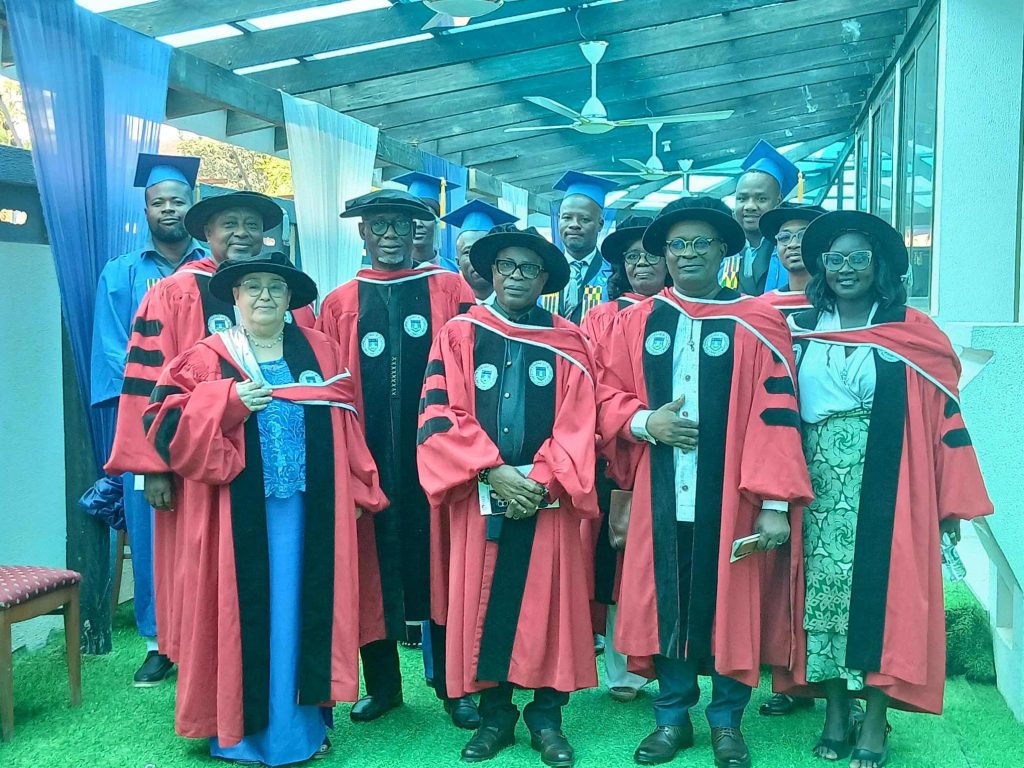
Professor Lord Mawuko-Yevugah, Director of AFLO Global and Coordinator of the programme, said the changing global environment required leaders who understood international politics, diplomacy and governance, stressing that executive education had become increasingly relevant for professionals seeking to remain responsive to emerging global developments.
The partnership, he said, therefore sought to bridge the growing knowledge gap in diplomacy and international relations through executive education.
He added that AFLO Global was established to promote African perspectives in diplomacy and global engagement by drawing on indigenous approaches to conflict resolution and international cooperation.
He said the University and the Centre’s approach ensured graduates acquired both academic competence and transferable leadership skills required in today’s job market.
Prof Mawuko-Yevugah described the graduates as the pioneer cohort of the certificate programme and encouraged them to become ambassadors for the initiative while pursuing careers in diplomacy, international organisations, public service and related fields.
He assured that certificate acquired from the programme could also strengthen the academic profiles of participants seeking admission into postgraduate programmes.
Commenting on recent xenophobic attacks in South Africa, Professor Mawuko-Yevugah said sustained diplomatic engagement remained the most effective means of resolving such disputes, noting that dialogue between governments should continue to safeguard the interests of affected citizens.
Madam Elizabeth Adjei, a former Ghanaian Ambassador to Spain, who delivered the keynote address, challenged the graduates to become bridge-builders capable of promoting dialogue, justice and peaceful coexistence.
She observed that diplomacy was no longer confined to foreign ministries and embassies but had become relevant in business, civil society, religious institutions and other sectors where people from diverse backgrounds interacted.
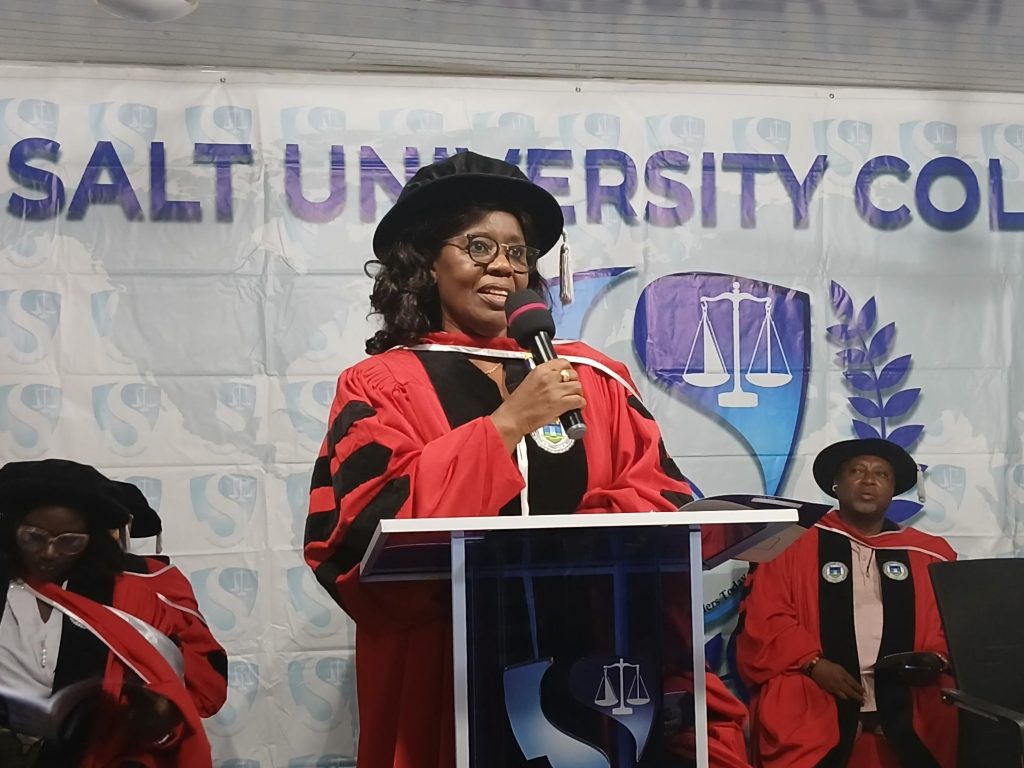
Madam Elizabeth Adjei reminded the graduates that leadership began with everyday choices rooted in integrity, accountability and service.
“The future is not shaped by those who merely predict it; it is shaped by those who prepare for it,” she said.
She urged the graduates to pursue lifelong learning, demonstrate humility and use their knowledge to strengthen institutions, promote transparency and contribute meaningfully to national development and global peace.
GNA