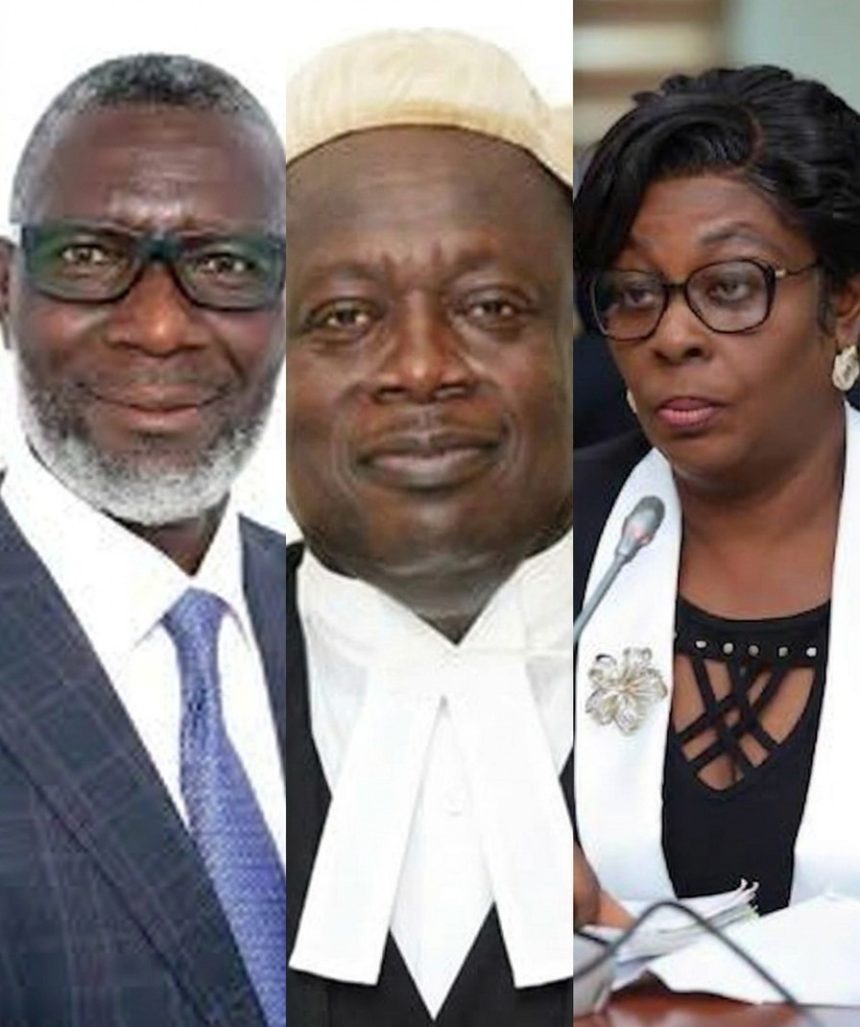
Parliament has approved the appointment of three nominees to the Supreme Court, overriding objections from the Minority Caucus in a decision that exposed fresh tensions over the legislature’s vetting processes.
The approval, secured by a majority vote at both the committee and plenary levels, clears the way for Justices Edward Amoako Asante and Sophia Rosetta Bernasko Essah, both Court of Appeal justices, and private legal practitioner Anthony Forson Jr. to be elevated to the nation’s highest judicial bench.
The confirmation followed the presentation of the Appointments Committee’s report by its Chairman, Bernard Ahiafor, who also serves as First Deputy Speaker.
Mr Ahiafor recommended that the House adopt the report and ratify the nominees, having found that they satisfied the constitutional requirements under Article 104.
The path to approval was not without contention. During the public hearing, the Minority Caucus raised preliminary objections to the vetting process, citing procedural concerns.
Although those objections were addressed, Minority members of the committee subsequently staged a walkout, declaring that they would have no further involvement in the proceedings.
Presenting the report, Mr Ahiafor noted that despite the Minority’s withdrawal, the majority of members present and voting determined that the nominees were qualified and recommended their approval.
Justifying the Caucus’s opposition on the floor, Minority Leader Alexander Afenyo-Markin insisted that the objections were procedural and not a reflection on the nominees’ personal or professional standing.
“We have not questioned, and we do not question today, the character, the competence, or the standing of any of the three nominees before this House,” Mr Afenyo-Markin stated.
He explained that the emergency recall of Parliament, which concluded on the same day, left the Appointments Committee with only three working days to vet five nominees across two of the most consequential categories of public office.
The Minority, he said, raised a preliminary objection based on nine distinct constitutional and procedural grounds, all of which were dismissed by the committee chairman.
Following that dismissal, he added, the Caucus withdrew from the process entirely.
“What this House is now asked to adopt is a report produced afterwards by Majority members alone,” Mr Afenyo-Markin said, urging the House not to mischaracterise the Minority’s stance as opposition to the nominees themselves.
The approved justices will be sworn in at a date to be announced by the Judicial Service, pending the finalisation of administrative formalities.
Their appointment adds to the ongoing efforts to fill vacancies on the Supreme Court and bolster the apex court’s capacity to handle its growing caseload.