Two Right To Play (RTP) Ghana projects are targeting 25,000 children, 3,800 teachers and parents across 74 rural communities to improve education and child protection.
The “My Life, My Rights” (MLMR) project is targeting 17,000 children, 3,000 parents and 400 teachers across 50 communities, while the “My Rights, My Future” (MRMF) project targets 8,000 children and 800 teachers in 24 communities.
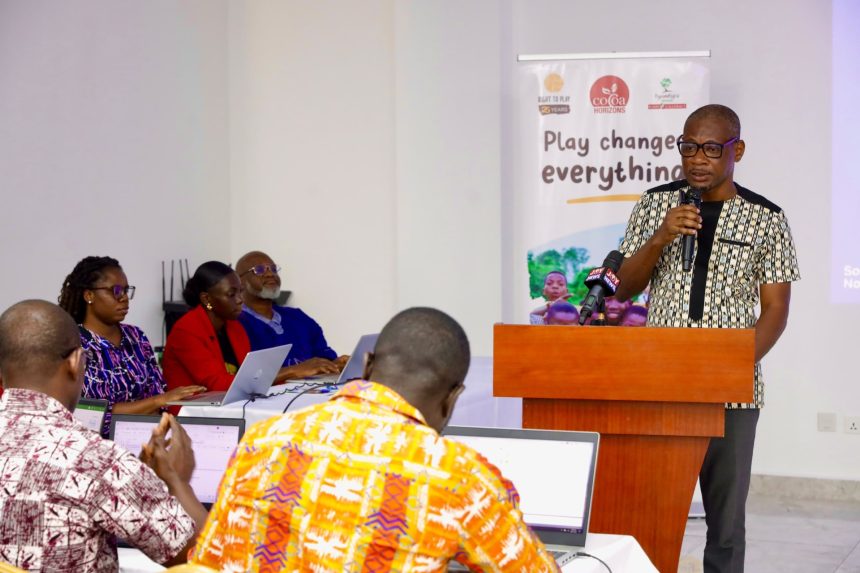
A national stakeholder engagement meeting held in Accra on Tuesday provided partners an opportunity to reflect on progress, share experiences and lessons, and strengthen implementation efforts in the years ahead.
Speaking on the sidelines of the meeting, Mr Julius Kwami Tsatsu, Project Manager of MLMR, said the project was progressing steadily in the Asunafo North, Adanse South, Adanse Asokwa and Akrofuom districts.
He said MLMR had so far reached 11,000 children and about 3,000 youth, while strengthening community and district child protection structures in cocoa-growing areas.
Mr Tsatsu said Community Child Protection Committees (CCPCs) were helping to address child rights violations, including forced labour and other forms of exploitation.
He said the project was also addressing poverty, a major contributor to child labour, through Village Savings and Loans Associations (VSLAs), which provided financial support and economic empowerment to parents.
“If they [parents] become economically empowered, they will be able to support their children in school and hire adult labour instead of using children on their cocoa farms,” he noted.
Mr Tsatsu, however, identified teacher attrition and inadequate resources for child protection officers as challenges requiring collaboration among stakeholders.
“There are basic schools that are supposed to have nine teachers including the headteacher, but we have only two or three and classes are combined for multi-grade teaching, which is very appalling,” he said.
He said some child labour persisted, particularly among migrant farmers who were reluctant to enrol their children in school.
“We formed District Child Protection Committees that handle child protection issues at district level and Community Child Protection Committees (CCPCs) at community level.
“When issues come up, the CCPCs are the first point of call. If it is truancy, they handle it… We have established a proper referral system linking community to district to national level,” he noted.
Ms Josephine Baffoe, Acting Project Manager of MRMF, said the project was empowering children in the Oti and Volta regions to become advocates for their rights.
She said MRMF was addressing exploitative child labour and trafficking in Kadjebi, Krachi East, Krachi West and Nkwanta South through interventions including child rights clubs.
Ms Baffoe said the three-year project had reached 4,320 children and was also targeting 190 teachers, including education directors, to promote safe and inclusive classrooms.
She said children were being supported through club activities to distinguish between child labour and child work, while guidance and counselling coordinators helped identify children in distress.
Ms Baffoe said the projects initially faced resistance in some communities, but awareness and collaboration had improved as community members became more willing to speak up and report abuse.
Mr Harrison Akubor, Head of Office, Right To Play Ghana, commended partners, government institutions, community structures, schools and teachers for supporting the initiatives, which are scheduled to end in 2027.
He said the organisation was working with the Ministry of Education, Ghana Education Service and other stakeholders to facilitate teacher transfers to remote communities and address teacher attrition.
Mr Akubor called for sustained stakeholder commitment to address the challenges identified and preserve the gains made under the projects.
Right To Play Ghana, a non-governmental organisation, supports children’s wellbeing and access to quality play-based education through various programmes.