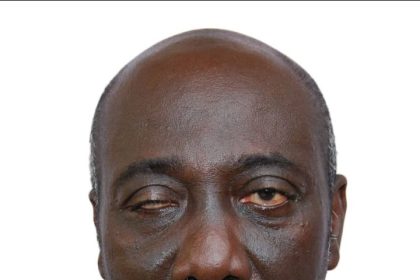
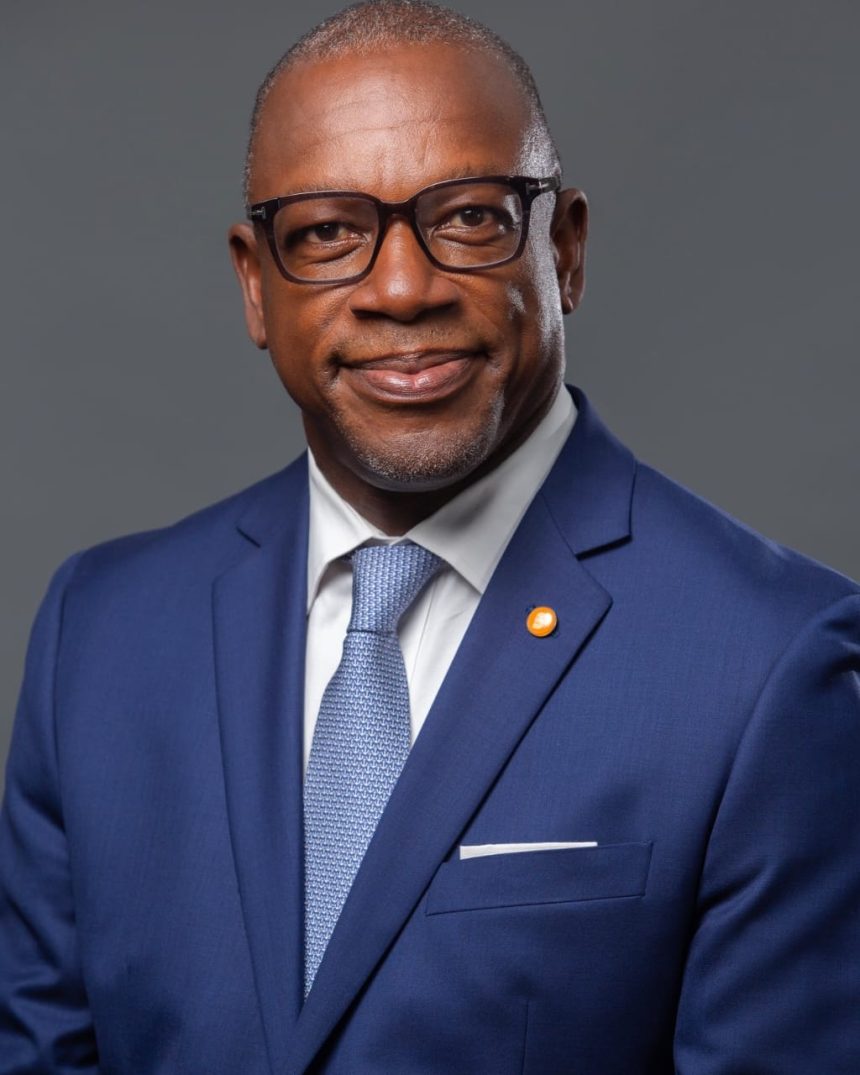
On 6th October, Fidelity Bank marks 20 years. A milestone that celebrates not only a remarkable institution, but also the man whose vision, discipline, and audacity reshaped Ghana’s banking landscape.
Edward Effah now stands among the nation’s most consequential builders, having proved that indigenous excellence can rise to the very top of a competitive, globalised financial sector. In every meaningful sense, he is the doyen of Ghanaian banking.
My journey with Edward began long before I understood the scale of what he was building. In 2006, I walked into Fidelity Discount House with my boss, Dr. Eka, who taught me to think big and see possibility where others saw limits. We came with an unnecessarily complex proposal to discount cashew bills through a structure that demanded both imagination and appetite.
Edward listened carefully, his unmistakable London inflections accompanying every thoughtful question. Then, with characteristic gentleness and sophistication, he explained that the proposal was too intricate for Fidelity at the time. He was gracious, candid, and more interested in doing simple things with excellence than in pursuing complexity for its own sake.
Edward may not remember that meeting. I do. Even then, he carried the quiet confidence of a man who knew exactly what he was building. Fidelity’s subsequent ascent would vindicate that confidence.
Fidelity entered the banking industry as the 22nd bank, a modest newcomer in a crowded field. Two decades later, it stands as Ghana’s largest privately owned bank and a top five bank nationally, standing shoulder to shoulder with multinational giants.
That ascent was no accident. Edward built Fidelity with discipline, audacity, and what I call careful fearlessness; a rare combination that defines transformational leadership.
The scale of that transformation is measurable. Launched on 6 October 2006 with a single branch, Fidelity has grown to more than 80 branches, over 7,000 agents, and approximately 3.2 million customers. In 2025, the Bank reported total assets of GH¢26.0 billion, customer deposits of GH¢21.7 billion, shareholders’ equity of GH¢2.8 billion, total revenue of GH¢2.7 billion, and profit before tax of GH¢1.5 billion.
The story is not only one of scale. Edward championed mobile money before its potential was widely understood, recognising its power to advance financial inclusion. He pioneered agency banking when others doubted its viability, bringing financial services to communities long excluded from formal banking. And even when Fidelity was small, he insisted on international-grade governance and standards because he believed Ghana deserved institutions that could stand tall anywhere in the world.
Our paths crossed again in 2015, this time with far greater stakes. In his office, I presented a proposal to restructure the energy sector’s debt in response to a national crisis that demanded clarity, courage, and institutional leadership. The idea was ambitious and relatively unprecedented. Many doubted it. Many dismissed it.
Edward did not.
He gave me a hearing and believed in the possibility. Then, true to form, he simplified the sophisticated, shaping the concept into a structure that could work, scale, and help save an industry. It became ESLA, one of the most consequential financial interventions in Ghana’s recent history.
Together with Leonard Gikunoo, Frank Adu, Abiola Bawuah, Seth Terkper and the late Vice President Paa Kwesi Amissah-Arthur, we pushed through resistance, refined the model, and kept the vision alive. H.E. Dr. Bawumia, Ken Ofori-Atta, and Charles Adu-Boahen helped bring it to life. Fidelity’s role was pivotal. Edward’s leadership was decisive and his wider institution-building influence was evident.
Edward Effah did not merely steward a great bank; he founded it, cultured it, worked it and led it to the greatness we see today. Ghana’s financial sector has benefited from many exceptional bankers who strengthened the institutions they served. Edward belongs to a rarer class: founder-builders who create an institution, forge its identity and governance, and raised it with discipline and audacity into a national champion. In that class, he stands foremost.
To me, Edward is a model of hope. A proof that Ghanaian institutions can be built with courage, governed with integrity, and scaled with world-class sophistication.
Edward Effah did not just build a bank. He built belief. Belief in Ghanaian capability, Ghanaian leadership, and Ghanaian excellence. He stands as one of the most distinguished figures in Ghanaian commerce.
He is the Doyen of Ghanaian Banking!
GeePapa