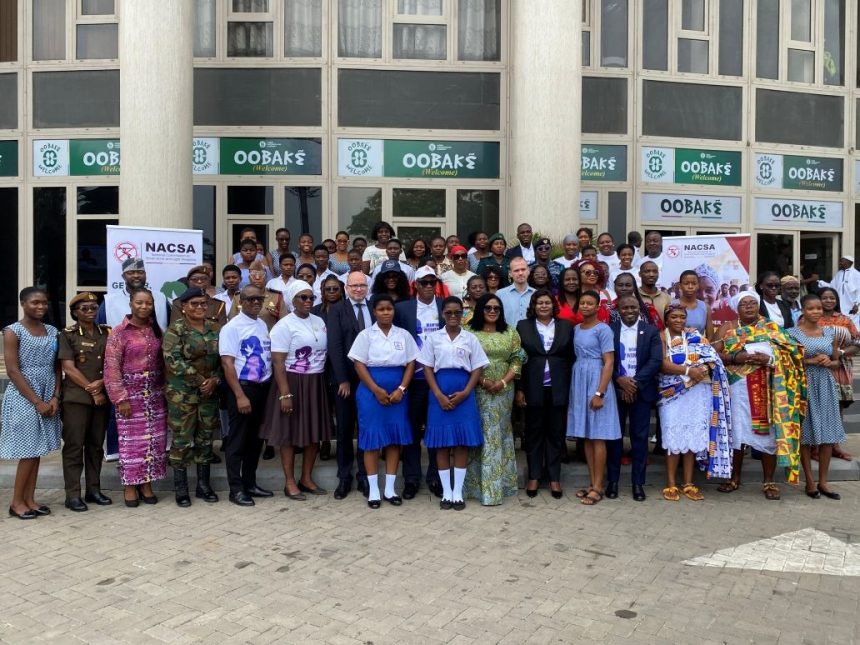
Professor Jane Naana Opoku-Agyemang has called for women’s empowerment to remain central to Ghana’s peace, disarmament and national security agenda, saying inclusive leadership strengthens communities and promotes sustainable peace.
“When women participate meaningfully in leadership and decision-making, nations become more inclusive, stable and responsive,” she added.
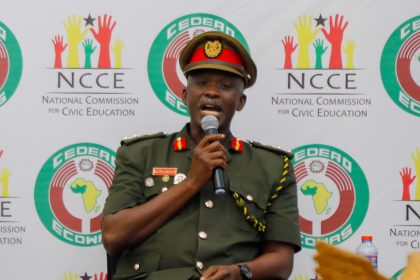
The Vice President made the remarks in a keynote address delivered on her behalf by Dr Agnes Naa Momo Lartey, the Gender Minister, at the Women and Girls Empowerment Seminar held to commemorate the 2026 International Women’s Day for Peace and Disarmament in Accra.
The seminar was organised on the theme: “Women and Girls as Active Agents of Peace and Disarmament: From Awareness to Action for a Peaceful and Gun-Violence-Free Ghana.”
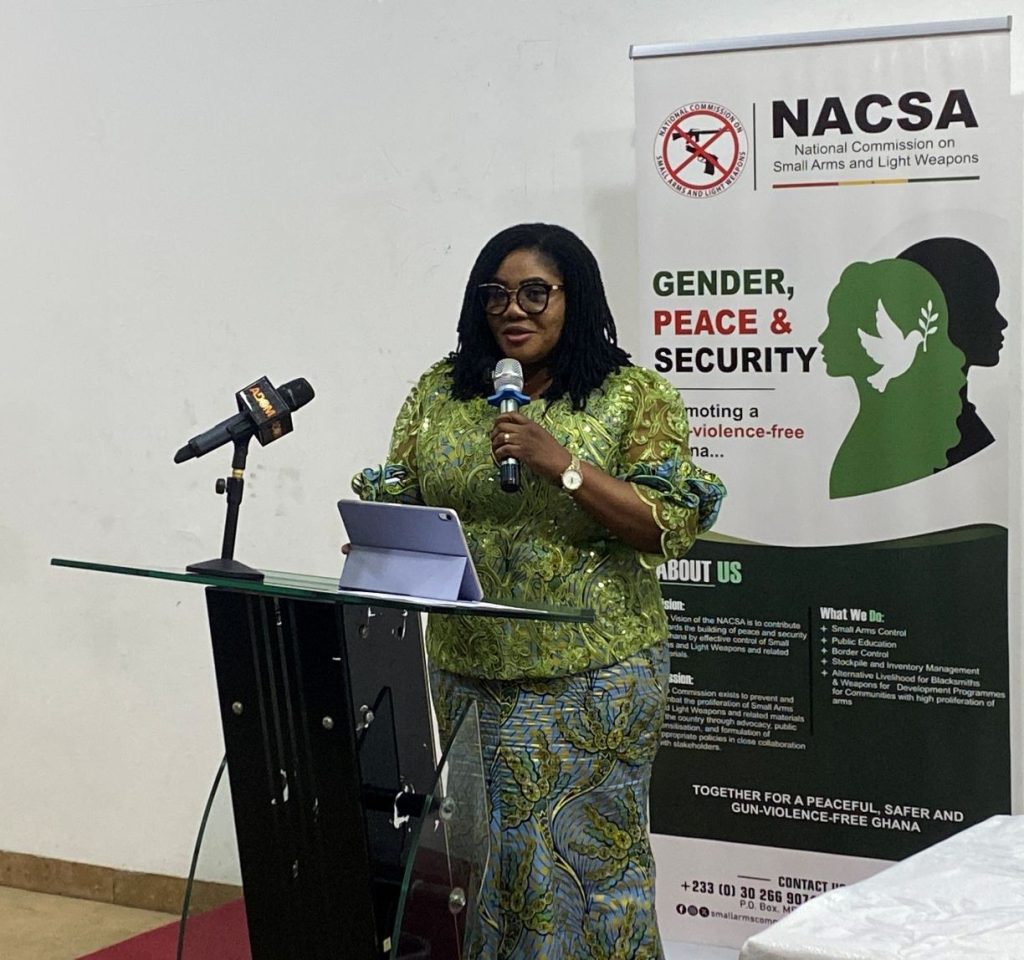
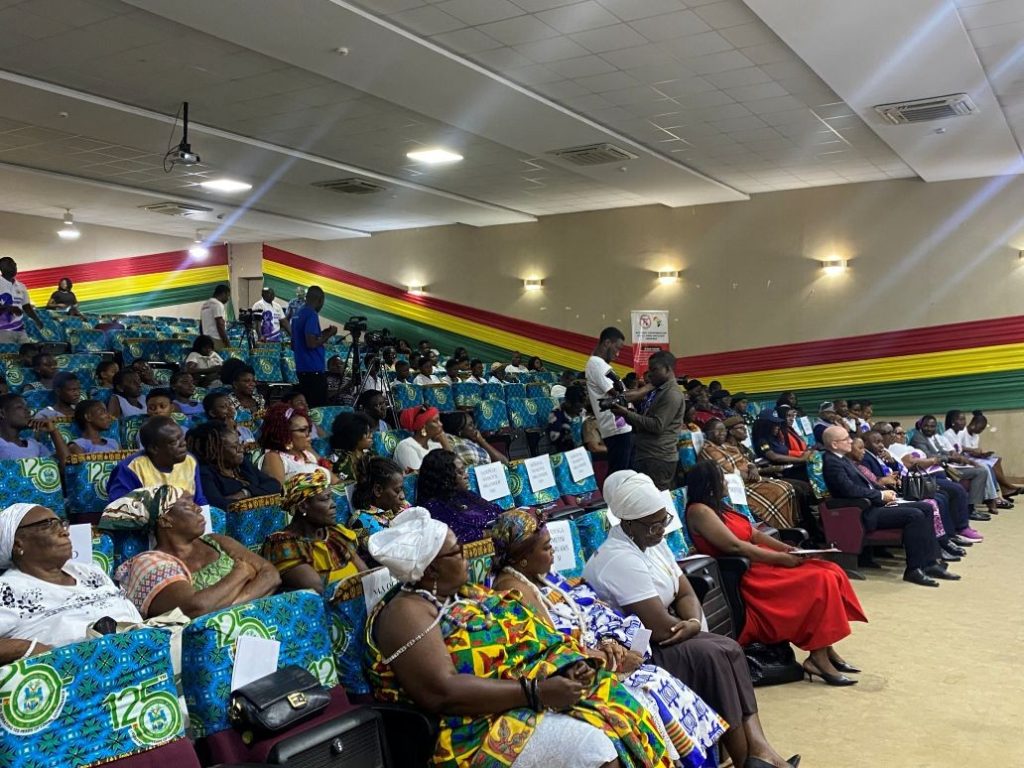
It brought together participants from faith-based organisations, traditional authorities, market associations, educational institutions, political parties, civil society organisations, security agencies, government institutions and development partners to discuss strategies for promoting peace, preventing gun violence and strengthening community participation in disarmament efforts.
The programme sought to equip women and girls with practical knowledge and tools to actively contribute to peacebuilding, violence prevention and disarmament efforts in Ghana, while strengthening collaboration within the national peace and security framework.
In the statement, the Vice President said sustainable peace could not be achieved through enforcement measures alone, nor could it be attained when women remained excluded from shaping peace and security structures.
“For generations, women across Ghana and Africa have served as silent architects of peace within families, communities and nations,” she stated.
She said that despite their contributions in mediating conflicts, preserving social cohesion and sustaining communities during periods of hardship, women remained underrepresented in formal peacebuilding and disarmament structures.
“This is a reality that we must be deliberate in changing today,” she noted.
The Vice President said illicit small arms proliferation and gun-related violence were not only security concerns but also development, human rights and gender issues.
When gun violence took root in communities, women and children often suffered the gravest consequences through insecurity, disrupted education, economic hardship and increased gender-based violence, she said.
Prof Opoku-Agyemang said women’s representation in leadership spaces was critical because women broadened perspectives, inspired future generations and strengthened democratic governance.
She encouraged the creation of clear pathways that would enable women and girls to participate confidently in governance, mediation, advocacy, peacebuilding and national development.
The Vice President said Ghana was committed to the Women, Peace and Security agenda, particularly through the implementation of the United Nations Security Council Resolution 1325 on Women, Peace and Security.
She, however, noted that the true measure of the country’s commitment would be reflected in the impact of such policies within homes, schools, markets, workplaces and communities.
Addressing young women and girls at the seminar, she encouraged them to recognise their potential in shaping society.
“Your voice matters. Your ideas matter. Your leadership matters,” she added.
She urged participants to move beyond discussion towards action by strengthening partnerships between institutions and communities and amplifying the voices of women in disarmament and peacebuilding efforts.
The Vice President reaffirmed the government’s commitment to promoting women’s empowerment, strengthening social cohesion, protecting vulnerable populations and advancing sustainable peacebuilding initiatives across the country.
Mr Muntaka Mohammed-Mubarak, the Minister of the Interior, in a statement read on his behalf, said the spread of illicit small arms continued to threaten peace and democratic stability across West Africa and within Ghana.
He warned that a single illicit firearm in the wrong hands could destroy lives, fracture communities and derail years of development.
The Interior Minister said women and girls often bore the heaviest burden of gun-related violence but also remained among the most effective agents of peacebuilding and conflict prevention.
He cited the roles of queen mothers, teachers, mothers and young women in mediating disputes and promoting tolerance within communities.
Mr Mohammed-Mubarak said Ghana’s peace and security approach must intentionally place women and girls at the centre, “not as victims to be protected, but as frontliners to be empowered.”
He disclosed that the government was strengthening legal and institutional frameworks for arms control in line with international protocols, including the ECOWAS Convention, the Arms Trade Treaty and the United Nations Programme of Action on Small Arms and Light Weapons.
The Minister also highlighted ongoing intelligence-led operations and community policing initiatives aimed at intercepting illicit weapons and building trust between citizens and security agencies.
He noted, however, that security operations alone would not eliminate gun violence without broader societal change.
“We need more community-based peace and disarmament clubs, peer education programmes and dialogue platforms championed by women and girls,” he said.
Mr Mohammed-Mubarak further urged women’s participation in peace committees, disarmament dialogues and local security forums to be meaningful rather than symbolic.
“To our young women and girls across Ghana, you are not the future of peacebuilding and disarmament, you are the present,” he stated.