Mr Seth Terkper, Presidential Advisor on Economy has urged the Association of Ghana Industries to work closely with government, financial institutions and other development agencies to translate the New Economy Agenda into tangible industrial outcomes.
He said the ultimate objective of the agenda was to build a competitive, inclusive and sustainable industrial economy in which Ghanaian businesses created jobs, workers earned decent incomes and the country’s natural resources generated lasting value.
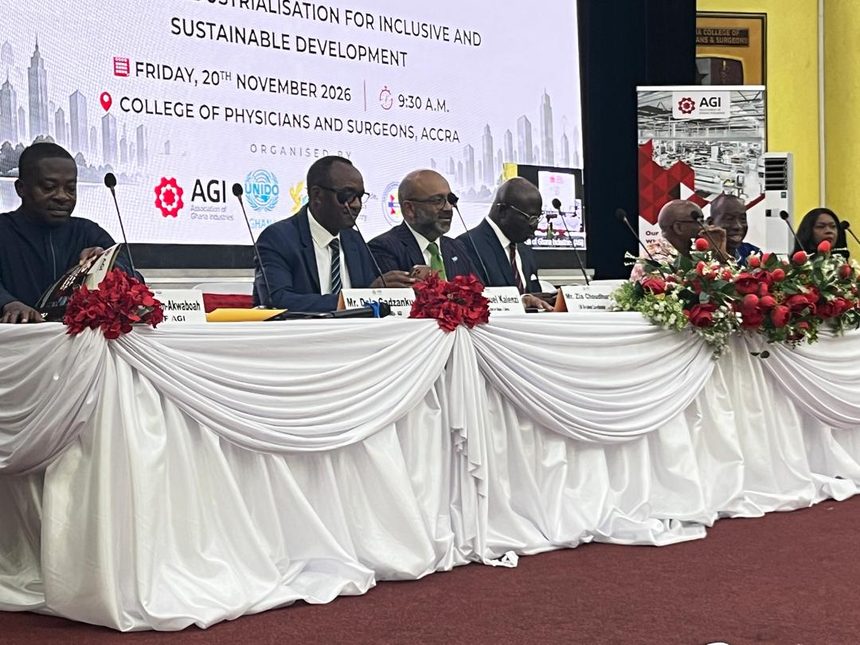
Mr Terkper said this during the 66th Annual General Meeting of the AGI Speaking to mark African Industrialisation Day in collaboration with the United Nations Industrial Development Organization.
It was on the theme: “Financing Industrialisation for Inclusive and Sustainable Development.”
The New Economy Agenda was a deliberate four-year programme, from 2027 to 2030, aimed at transforming Ghana’s economic structure from stabilization and recovery towards production and value addition.
The 2027 Budget had committed GH¢10 billion to the programme over four years, with an initial allocation equivalent to 1.5 per cent of Gross Domestic Product.
The initiative is intended to expand productive capacity, support businesses, increase exports and create better incomes and employment opportunities.
He said Ghana must sustain its debt repayment record and strengthen domestic capital markets to attract long-term financing for industrialisation and private sector growth.
He said the country’s experience with debt defaults and restructuring underscored the importance of responsible borrowing, prudent debt management and the establishment of sustainable repayment arrangements.
Mr Terkper noted that although Ghana had made significant progress towards restoring macroeconomic stability, sustaining those gains would require a deliberate shift towards productive investment and a stronger industrial base.
The Presidential Adviser cited Ghana’s recent return to the international capital market through the issuance of a US$1.5 billion international bond at an interest rate of 8.375 per cent, describing it as evidence that the country could rebuild investor confidence.
He referred to the country’s domestic bond programme, saying the experience demonstrated the potential of mobilising local savings to finance national development.
However, he cautioned that Ghana’s previous debt challenges offered important lessons, particularly the need to establish dedicated repayment accounts to prevent future defaults.
A speech read on behalf of Mrs Elizabeth Ofoe’s-Adjare, the Minister of Trade, Agribusiness and Industry said the government was working to secure long-term, competitive financing for industries to accelerate Ghana’s industrialisation drive and promote sustainable economic growth.
She said that the provision of appropriate financing instruments was critical to enabling local industries to expand production, improve competitiveness and contribute meaningfully to national development.
The Minister said the existing short-term lending arrangements, which often required businesses to repay loans within two to three years, were unsuitable for long-term industrial investments.
Mr Kofi Nsiah-Poku, President of AGI, called for credit guarantees, working capital and investment funding for SMEs, particularly those seeking to modernise machinery, automate operations and adopt digital technologies.
The AGI President said financing for energy efficiency, renewable energy and cleaner production was important to ensure that Ghanaian industries remained competitive in international markets.
He said Ghana must transition from an economy that largely consumed imported products to one that produced, processed and exported more locally manufactured goods.
He urged public institutions and private-sector organisations to prioritise made-in-Ghana products in their procurement activities.
GNA