The African Group of Negotiators (AGN) has expressed disappointment with decisions on climate education and long-term climate finance at the 31st United Nations Climate Change Conference (COP31), saying Africa’s concerns were not adequately reflected in the outcomes.
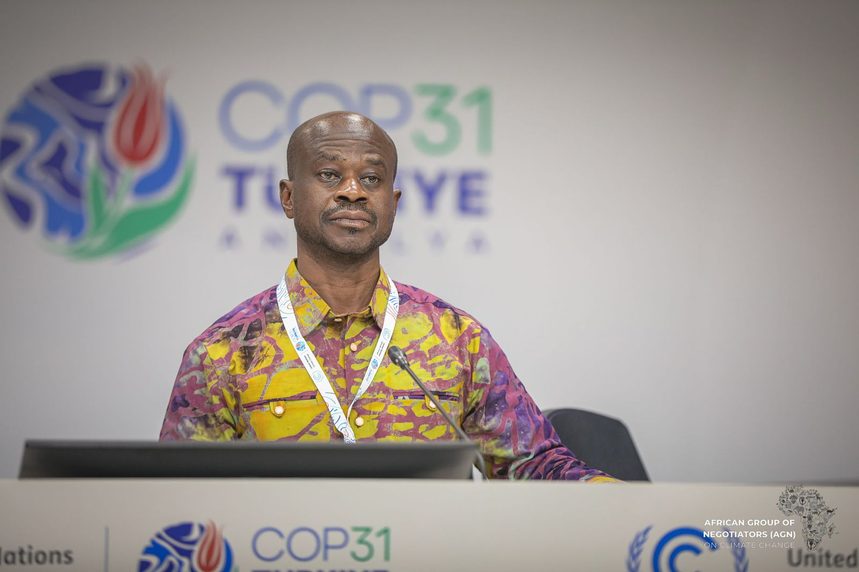
Nana Dr Antwi-Boasiako Amoah, Chair of the AGN, said the negotiations on Action for Climate Empowerment (ACE) and long-term climate finance had failed to address key African positions, despite the Group’s constructive engagement.
Action for Climate Empowerment (ACE) is a UN climate framework that promotes climate education, public awareness, training, access to information and public participation to help people understand and respond to climate change.
Speaking at the closing plenary, he also questioned aspects of the process leading to the adoption of the decisions, particularly the role of the COP31 Presidency in facilitating consensus among countries.
The Group said the proposed Action Plan for 2027–2031 under the Glasgow Work Programme did not address its substantive concerns and clearly communicated red lines.
It argued that the Presidency’s responsibility was to facilitate agreement among Parties rather than determine or impose outcomes on their behalf.
“The Presidency’s responsibility is to facilitate consensus among Parties, in accordance with the rules of procedure, not to determine or impose an outcome on their behalf,” the Group stated.
The AGN maintained that climate negotiations must remain party-driven, with the positions of all countries meaningfully considered before decisions were finalised.
On long-term climate finance, the Group said parties had not been given sufficient opportunity to engage with the proposed decision, raising concerns that some paragraphs and provisions had not been adequately negotiated.
It also questioned the evidence used to assess the US$100 billion climate finance goal, saying the assessment relied on only two sources.
The Group said Biennial Transparency Reports (BTRs) were not given equal consideration by the Standing Committee on Finance (SCF), calling for a stronger methodology to improve confidence in assessments of climate finance provided and mobilised.
The AGN, however, indicated its willingness to adopt the long-term finance decision if paragraph three of the draft text was revised to better reflect the realities of financial provision and mobilisation.
It proposed changes to avoid relying on references to key messages which, in its view, did not accurately represent the financial realities being assessed.
The Group said credible climate finance reporting was important to establishing whether developed countries were fulfilling their commitments and providing predictable support to developing countries.
The concerns came as the COP31 closing plenary extended late into Saturday, with negotiators divided over whether the final agreement should explicitly address the phase-out of fossil fuels and provide support for vulnerable countries to adapt to climate change.
The AGN said the effectiveness of climate negotiations depended not only on the adoption of decisions but also on transparent and inclusive processes that respected the concerns of countries most vulnerable to climate impacts.
Africa’s position, it said, remained that climate action must be accompanied by the resources needed to implement it.
“Implementation needs means of implementation,” the Group stressed.
GNA