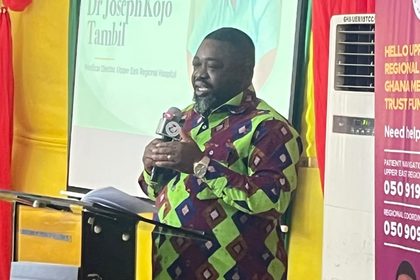
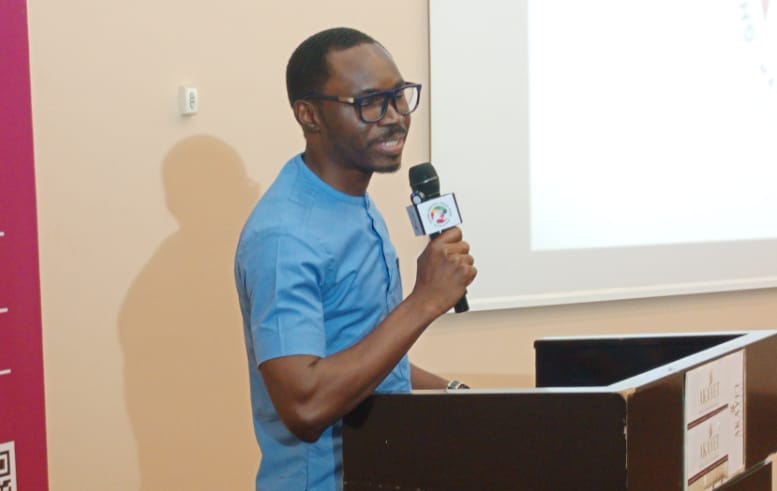
Dr Victor Dassah, a Surgeon at the Upper East Regional Hospital, has commended the Ghana Medical Trust Fund (GMTF) for extending its support to cancer patients.
He noted that the Fund eased the financial and emotional burden associated with cancer treatment, and said the support brought relief to patients who previously struggled to access further treatment due to financial difficulties.
Speaking on the impact of the GMTF, at a soiree for partners, specialists and management of the hospital, organized by the GMTF in Bolgatanga, the Surgeon disclosed that the hospital had so far enrolled 14 breast cancer patients and one prostate cancer patient onto the Fund.
“I want to thank management of the Fund extensively. I have a personal experience with cancer, and it is not easy being a cancer patient or a relative of a cancer patient. The financial, psychological and other challenges are enormous,” he said.
Dr Dassah expressed appreciation to the Fund for including cancer care in its programmes, describing the support as a significant intervention for patients who would otherwise struggle to finance their treatment.
According to him, some patients had delayed seeking further treatment for several months, while others had waited close to a year because they could not afford the cost of care.
“One patient had been coming to the hospital for almost a year but, because of financial difficulties, she was unable to proceed with further treatment. However, about a month ago, she was enrolled onto the programme, and since then, approvals have been given for her management and treatment plan,” the Surgeon said.
Dr Dassah noted that the GMTF, popularly known as MahamaCares, had restored hope among beneficiaries, many of whom he said expressed gratitude for the assistance they received.
The Surgeon emphasized that the financial burden of healthcare could be overwhelming even for medical professionals and stressed the need for healthcare providers to appreciate the difficulties patients face when required to pay for medicines, investigations and treatment.
“Even as a medical person, if I must go somewhere to pay my own medical bills, it is not easy for me. So, imagine somebody who is not in the medical profession and may not have the means to pay,” Dr Dassah said.
He further commended management of the Fund for improving the patient enrolment process, saying the process, which previously took considerable time, had become faster.
“Initially, it usually took some time before many of these patients were enrolled. But these days, the last patient I enrolled was processed in less than a few hours. Things have really changed, and in most cases, patients are enrolled in less than 24 hours,” the Surgeon disclosed.
Despite the progress, the Surgeon appealed to the Fund and relevant stakeholders to support the hospital to address infrastructure and diagnostic gaps that continued to affect comprehensive cancer care.
He said the hospital could take biopsies but lacked the capacity to conduct histopathological examinations locally, which forced patients to seek such services at other facilities.
He noted that the situation increased the burden on patients and resulted in the loss of potential revenue to the hospital through referrals.
He further disclosed that the hospital had oncology specialists willing to administer chemotherapy but was yet to establish the necessary capacity to commence the service due to institutional challenges and called for support to strengthen the hospital’s cancer management services, particularly histopathology and chemotherapy, to enable patients to receive more comprehensive care at the facility.
“We are hoping the Fund will help us structure our cancer management so that we would not have to refer cases we diagnose here. We have the manpower for most of the treatments, but we need the necessary support and facilities,” Dr Dassah said.
He expressed optimism that addressing the gaps would improve access to timely cancer diagnosis and treatment, reduce the financial burden on patients and strengthen the hospital’s capacity to provide specialized healthcare services.
GNA