
The Government will mobilise dependable, long-term financing in cedis and reduce the cost and risks of housing delivery to make homes more affordable to Ghanaian households.
Mr Thomas Nyarko Ampem, the Deputy Minister for Finance, said the Government would work with banks, pension funds, insurers and development partners to mobilise capital suited to the long-term nature of housing.
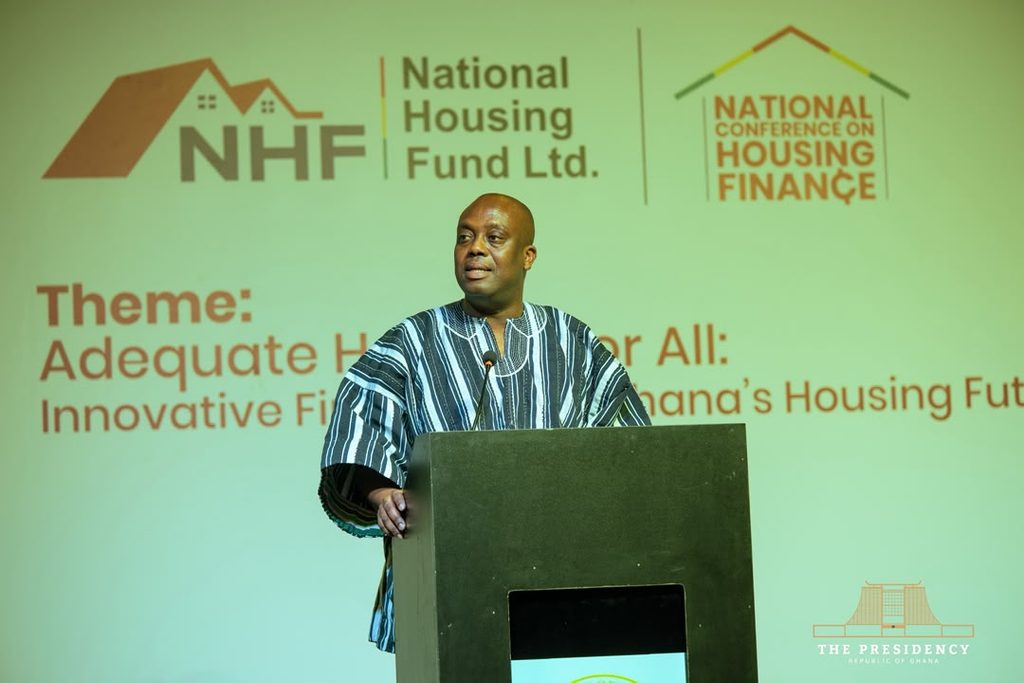
The Minister was speaking at the opening of a two-day National Conference on Housing Finance in Accra on the theme: ” Adequate Housing for all: Innovative Financing for Ghana’s Housing Future.”
The event brought together stakeholders to discuss measures to address the country’s housing financing challenges.
Mr Nyarko Ampem said the 2021 Population and Housing Census showed that 34.6 per cent of households lived in rented accommodation, with the proportion rising to 46 per cent in urban areas.
He said the figures demonstrated the need for housing policies that addressed affordability and location alongside construction, adding that homeownership could not be the only solution.
The Deputy Minister said affordable rentals, starter homes, rent-to-own arrangements, incremental building and targeted social housing were also necessary to meet the varied needs of households.
He said recent economic improvements had created better conditions for housing finance, with headline inflation falling to 5.0 per cent in August 2026 from 23.8 per cent in 2024.
Mr Nyarko Ampem said borrowing costs had also fallen from about 30 per cent to between nine and 13 per cent, making financing more affordable for businesses and households.
He said the Government was also working to improve Ghana’s sovereign creditworthiness, noting that the country was currently rated B-with a stable outlook by Standard and Poor’s.
He said the medium-term ambition was to attain an investment-grade rating, which would help improve access to international capital and reduce risk premiums for Ghanaian banks and companies seeking long-term financing.
The Deputy Minister said improving sovereign creditworthiness would benefit banks, builders and borrowers because it would influence the availability and cost of capital for housing.
He said the Government would also continue to reduce the cost and risk of delivering homes by improving land ownership systems, local approvals, infrastructure planning, procurement and access to quality local building materials.
Mr Nyarko Ampem said housing delivery must be linked to economic opportunities, asking stakeholders to consider where workers would live when industrial parks, agro-processing centres and commercial hubs were developed.
He said the National Housing Programme, to be presented in the 2027 Budget, would focus on measurable targets, sustainable funding, and clear responsibilities across the housing sector.
The Deputy Minister said the GH¢500 million allocation for the District Housing Scheme in the 2026 Budget provided a starting point, while progress towards delivery targets, including the first 700 Saglemi homes scheduled for March 2027, would be tracked transparently.
He said the success of housing interventions would be measured by completed and occupied homes, manageable repayments, investment mobilised, and households served.