Ali Adolf John, Northern Regional Minister, has lauded the sanitation and agricultural projects being implemented by iDE Ghana for improving sanitation, public health, food security, and livelihoods across northern Ghana.
He said the projects — Rural Sanitation and Hygiene in Northern Ghana (RuSHiNG) and Her Time To Grow (HTTG) — implemented by iDE Ghana with funding support from Global Affairs Canada, had significantly contributed to sustainable development efforts in the region through innovative sanitation and agricultural interventions.
Mr John made the remarks in a speech read on his behalf during the close-out ceremony for the two projects held in Tamale.
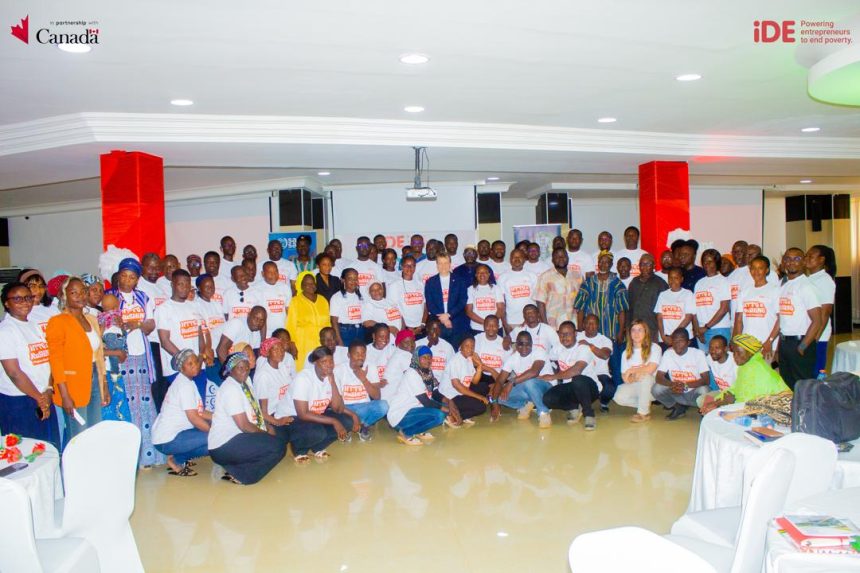
The ceremony brought together the Canadian High Commissioner to Ghana, the Head of Cooperation for GAC Ghana, representatives of development partners, public officials, and other stakeholders to highlight the projects’ key contributions, share lessons learnt, and explore pathways for scaling up and strengthening partnerships.
The RuSHiNG project was launched 10 years ago to deploy market-based approaches to address sanitation challenges across the sanitation value chain in seven regions — Northern, Savannah, Upper East, Upper West, Bono East, Ashanti, and North East Regions.
Over the period, the project facilitated the sale and construction of more than 18,000 household toilets, improving the lives of over 180,000 individuals.
It also contributed to job creation by supporting the establishment of more than 200 sanitation entrepreneurs and over 1,000 sales representatives across the beneficiary regions.
The HTTG project, launched four years ago, implemented targeted interventions including the promotion of good agronomic practices, entrepreneurship support through the Women’s Empowerment Challenge Fund, and the strengthening of Village Savings and Loan Associations.
Through these interventions, the project improved the livelihoods of more than 6,000 women smallholder farmers and positively impacted over 42,000 individuals in the Northern, North East, Savannah, Upper East, and Upper West Regions.
Mr John noted that the projects had strengthened the water, sanitation, and hygiene, as well as agriculture sectors, both of which were essential to socio-economic development.
Touching on the “Sama Sama” sanitation initiative under the RuSHiNG project, he said it had played a major role in reducing open defecation in communities across the region.
Speaking on the HTTG project, Mr John said it had helped women farmers transition from subsistence farming to commercial agriculture through the creation of market linkages and support for agricultural value chains.
He added that the initiative aligned with the government’s Agriculture for Economic Transformation Agenda and the Feed Ghana Programme aimed at boosting agricultural production in the country.
The Minister expressed gratitude to the Government of Canada for its continuous support towards improving living conditions in communities across northern Ghana.
Adam Fuseini, a beneficiary of the RuSHiNG project from Nakpanzo community in the Tamale Metropolis, said the intervention had significantly improved hygiene and helped address open defecation challenges in the area.
He explained that prior to the project, residents experienced unpleasant conditions and strong odours whenever they used public latrines. However, through the project, sanitation facilities and conditions had greatly improved, bringing relief and dignity to community members.
Francisca Ayariga from the Soe community in the Bongo District said the HTTG project had positively transformed her farming activities and livelihood.
According to her, she had been able to expand her farm size and increase crop yields, leading to improved household income.
Stuart Taylor, Chief Executive Officer of iDE Canada, said the two projects were guided by the same philosophy of empowering entrepreneurs to end poverty through local innovation, entrepreneurship support, market access, and financing.
Francoise Nduwimana, Head of Cooperation for GAC Ghana, expressed satisfaction with the partnership with iDE over the past decade.
She said:
“iDE’s triangular and cross synergy has paid off as shown in the impact numbers and testimonies shared. I am proud of the Canadian footprint to which the two projects of iDE contributed. I am also grateful for your vision and dedication; they made a huge difference.”
Hilda Alhassan Wunniche, Acting Country Director of iDE Ghana, stressed the importance of sustaining the gains made under the projects.
She stated:
“As we transition, our focus is on sustainability. These projects were never meant to last forever, but their benefits should. We are handing over a foundation that is now ours to build upon. The tools are in place, the capacity has been built, and the momentum is ours to keep.”
GNA