
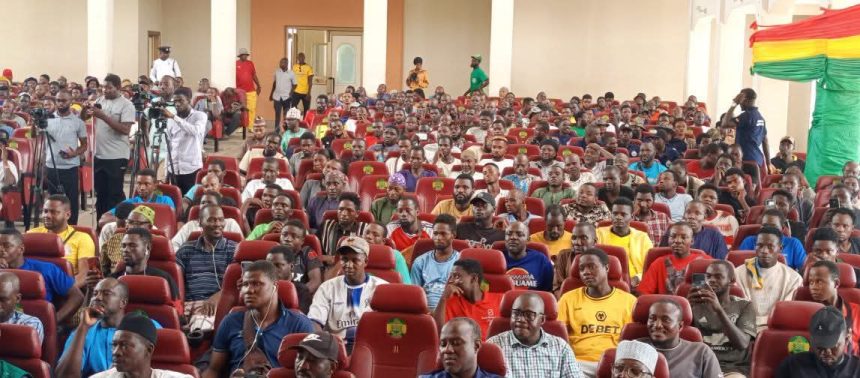
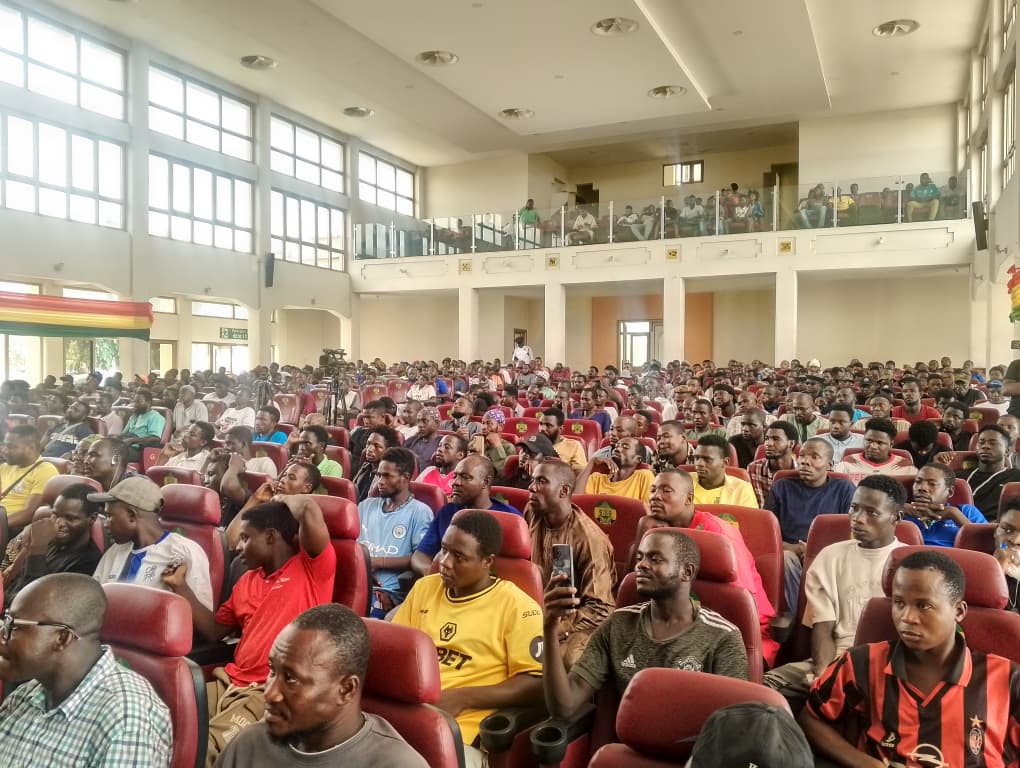
Thousands of tricycles popularly knownn as “Pragya” operators converged at the Prempeh Assembly Hall in Kumasi for a capacity-building workshop aimed at strengthening legal compliance and promoting safe riding practices.
The riders, drawn from across the metropolis and adjoining communities, arrived in large numbers, many with their operational documents while others sought clarification on evolving requirements relating to licensing, road conduct, and safety standards.
The training programme, organised with support from key stakeholders and sponsored by the Office of the Zongo Nkosuohene, focused on deepening participants’ understanding of traffic regulations, required documentation, and responsible riding techniques to help reduce accidents and misconduct, particularly within the Ashanti Region.
Participants were urged to strictly observe speed limits, comply with traffic signals and road signs, and avoid dangerous practices such as reckless overtaking and over speeding.
The workshop also introduced them to mandatory measures, including registration procedures and the issuance of identification stickers, to enhance monitoring and compliance.
Mr. Ben Abdullah Alhassan, the Municipal Chief Executive (MCE) for Asokore-Mampong, addressing the gathering, stressed that the Assembly would not tolerate indiscipline on the roads.
He noted that public confidence in the tricycle transport sector depended largely on the conduct of operators, adding that riders had a duty to ensure the safety of passengers and other road users.
He reminded participants of an earlier press statement outlining operational modalities for Pragya operators, warning that violations would attract strict legal consequences.
The MCE urged operators to cooperate with authorities and avoid confrontations.
He advised riders to internalise the regulations, remain calm during interactions with enforcement officers, and follow due process when addressing grievances.
Chief Superintendent Frederick Hammond, Manhyia Divisional Police Commander, announced that security agencies would intensify surveillance and patrols across the metropolis to ensure compliance.
He indicated that monitoring efforts would target major tricycle routes and hotspots, especially busy commercial areas with high traffic activity.
He cautioned that under the proposed regulations, operators must be at least 25 years old, adding that offenders would be dealt with in accordance with the law.
He emphasised that age, proper registration, and adherence to safety protocols remained critical benchmarks for lawful operations.
Mr. Seidu Mubarak, Ashanti Regional Chairman of the National Union of Tricycle Operators of Ghana, disclosed plans to introduce identification stickers and establish a task force to address indiscipline within the sector.
He said the initiative would promote accountability, improve professionalism, and reinforce compliance with road safety standards.
The task force, he noted, would collaborate with security agencies and other relevant institutions to educate offenders and recommend sanctions for persistent violations.
Representatives from the Driver and Vehicle Licensing Authority (DVLA) and the National Road Safety Commission (NRSC) also took turns to educate participants on licensing procedures, documentation requirements, and vehicle roadworthiness standards.
Some participants expressed appreciation to Alhaji Ali Abdullah Barry, the Zongo Nkosuohene, for initiating the programme, and called for similar engagements to be sustained. They acknowledged that the training had clarified several regulatory requirements and pledged to apply the lessons to improve discipline and safety on the roads.
GNA